Today it is easy to find Peruvian quinoa or maca in supermarkets around the world, but this reality is surprisingly recent. Just over a decade ago, both products were virtually unknown to the vast majority of international markets. The journey that took these crops from the Andes to international shelves has concrete dates and figures worth reviewing. We review, with dates and figures, the Peruvian superfoods export story and how it changed in just a few years.
2013: the year that changed everything for quinoa
A clear turning point came in 2013, when the UN declared that year the “International Year of Quinoa,” in recognition of its potential contribution to global food security. Peruvian quinoa exports, which in 2002 barely reached 0.3 million dollars, already totaled 79.4 million dollars in 2013 — an average annual growth of almost 66% over that decade. That same year, Peru shipped quinoa to 40 different markets, with the United States as its main buyer.
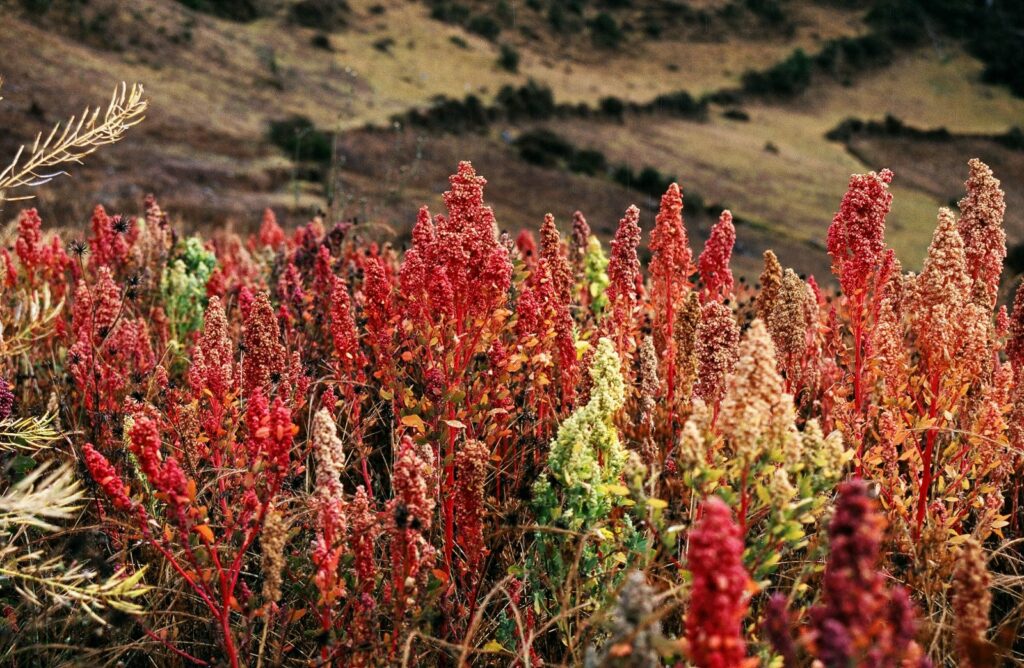
Peru overtakes Bolivia as world leader
Until 2013, Bolivia had traditionally been the world’s largest producer and exporter of quinoa. That leadership changed in 2014, when Peru overtook it for the first time: that year, Peruvian production reached 104,000 tonnes, compared with Bolivia’s 61,000. Peru has held that position ever since, diversifying its market to more than 70 countries and establishing itself, according to 2024 data, as the world’s leading producer and exporter of quinoa, with shipments to 69 different international markets.
Maca follows a parallel path
Maca went through a similar evolution, although with a somewhat different market profile. In 2015, when Peru was already establishing itself as the world’s leading maca exporter, its main buyers of fresh maca were Hong Kong (79% of the total), China (11%) and Vietnam (4%) — while maca powder/flour went mainly to the United States, Canada and several European countries. Between 2011 and 2015, maca production in Peru grew by a cumulative 235%. The market map has kept changing since then: by 2023, the United States had become the world’s main buyer of Peruvian maca, followed by Nigeria and Malaysia — a notable diversification compared with the initial concentration in Asian markets.
“Superfoods Peru”: when the government stepped in
In 2017, the Peruvian government launched “Superfoods Peru,” a country brand designed specifically to promote Peruvian crops with high nutritional value internationally. The strategy worked in terms of product diversification: by 2024, six of the country’s ten main organic export crops were precisely these “superfoods” — including cacao, quinoa, Brazil nuts, avocado, mango and maca.
A story that will probably repeat itself
What is interesting about this journey is that it follows a recognizable pattern: a local crop, virtually unknown outside its region of origin, which within a few years comes to be present in dozens of international markets. It is exactly the same path that ingredients such as aguaje, cushuro or tarwi — which we have already covered on this blog — could follow in the next decade, if they are given the same opportunity that quinoa and maca had ten years ago.
At Colibrí Origins, being part of that possible next wave is, to a large extent, this brand’s reason for being.
This content is for general information only and is not medical advice. If you have questions about eating a food or using a plant, consult a health professional.