Behind each of the Andean grains we have talked about on this blog lie decades of agronomic research — genetic improvement programs and studies on how the growing environment influences each harvest. This post reviews that research from a somewhat more technical angle than usual on the blog, without losing sight of the fact that the idea is to understand the big picture, not to memorize laboratory figures.
Genebanks and genetic improvement
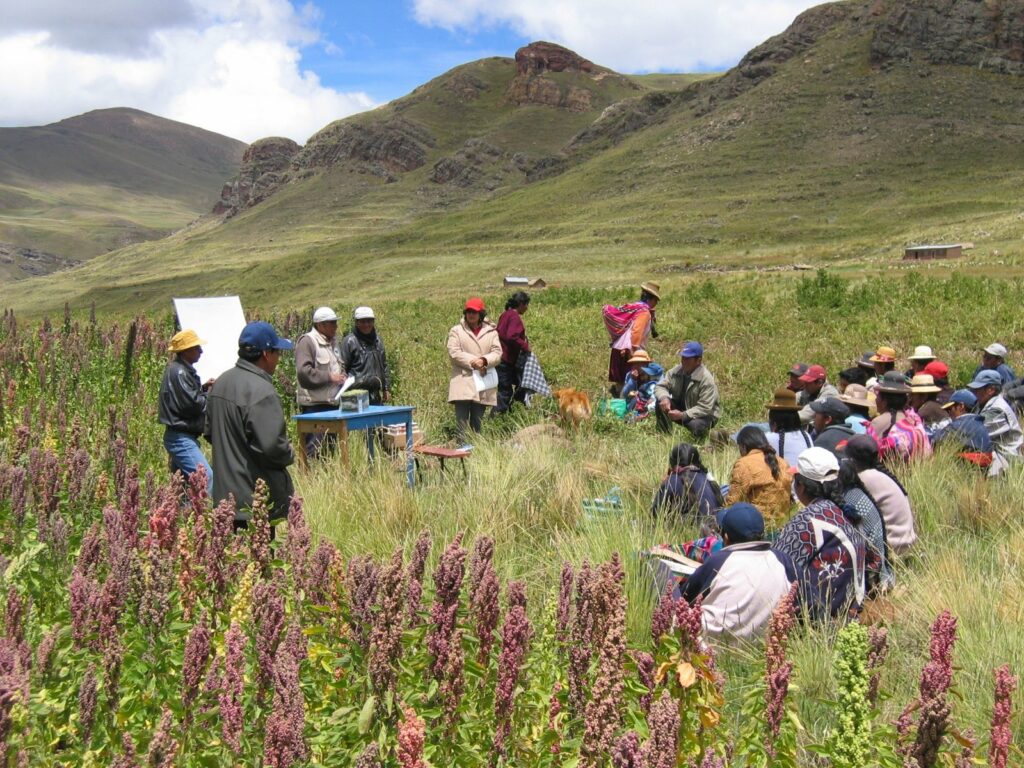
Peru’s National Institute of Agrarian Innovation (INIA) maintains genebanks for these crops, from which it has developed, through agromorphological studies, a set of high genetic value varieties of quinoa, kiwicha, cañihua and tarwi. These varieties are selected, among other criteria, for their tolerance to pests and diseases and their adaptation to different climates. According to the Ministry of Agrarian Development and Irrigation (MIDAGRI), these crops are the livelihood of more than 125,000 farming families in the country, especially in Andean regions such as Puno, Ayacucho, Cusco and Junín.
Protein composition: why they are so often compared with wheat
Much of the historical research on these grains — starting with now-classic studies from the 1970s — has been devoted to comparing their protein and amino acid composition with that of wheat, one of the most widely consumed cereals in the world. Institutions such as the International Potato Center (CIP) have continued to document this kind of comparison in later publications. It is this body of chemical composition data — measured and compared in the laboratory, not a marketing claim — that underpins much of what is said today about the nutritional profile of these crops.
A composition that is not fixed: the role of genotype and environment
Another relevant line of research shows that the composition of these grains — their phenolic compounds, for example — varies considerably depending on the specific genetic variety and the environmental conditions in which they are grown. Quinoa, in particular, tends to stand out within this group of crops for its higher concentration of these compounds, although the exact figure changes from one variety to another and from one season to another.
What this variability means for a crop like ours
This body of research leaves a relevant conclusion beyond any single figure: the composition of an Andean grain is not a fixed value — it varies according to genetic variety, altitude, soil and growing season. It is the same reason why, at Colibrí Origins, we place so much importance on knowing exactly which region and which producer each ingredient of our Andean biodiversity comes from, whether it is a grain or a root such as maca: traceability is not only a question of geographical origin, it is also, in a very literal sense, a question of composition.
This content is for general information only and is not medical advice. If you have questions about eating a food or using a plant, consult a health professional.