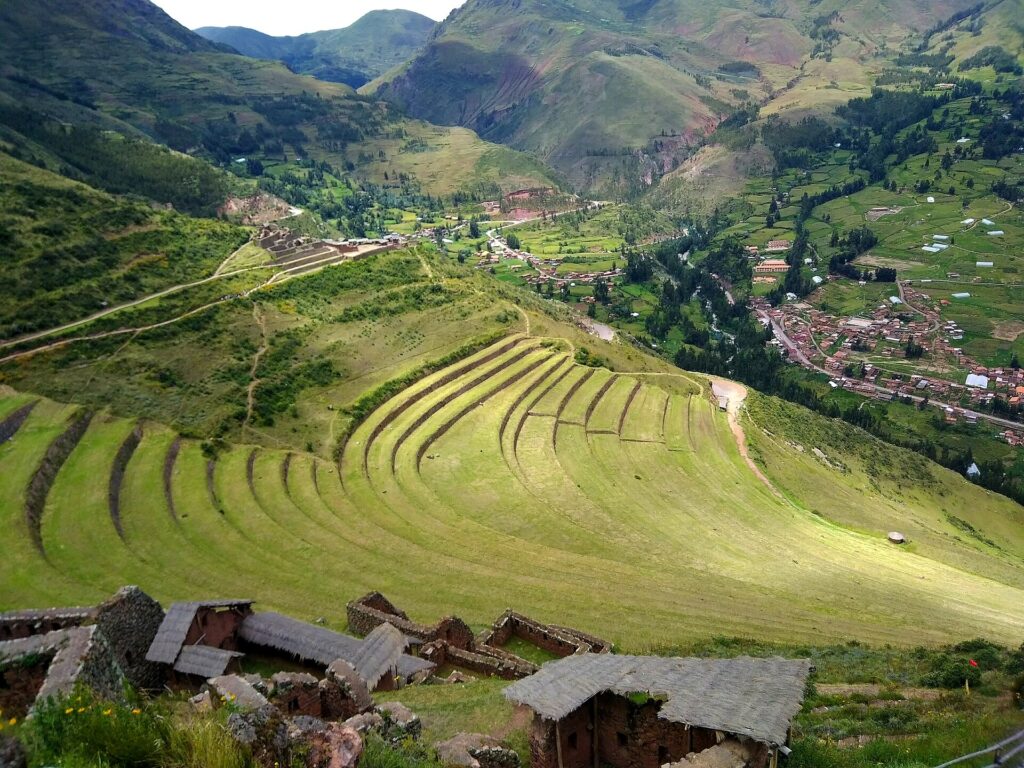
When people think of the Inca legacy, the first things that come to mind are usually temples and stone cities. But one of the most important works of Andean civilization is found on the mountain slopes, and its purpose was far more everyday: growing food where almost nothing wanted to grow.
Andean terraces: farming on the mountainside
Andean terraces, known as andenes, are stepped platforms built on hillsides and held up by stone walls. Their function goes well beyond creating flat ground. They reduce soil erosion, make it possible to organise irrigation and help retain moisture. The stones also absorb heat during the day and release it at night, which helps keep the soil above freezing temperatures. Today, many Andean farmers still grow their crops on Inca-style terraces.
Moray: a famous example
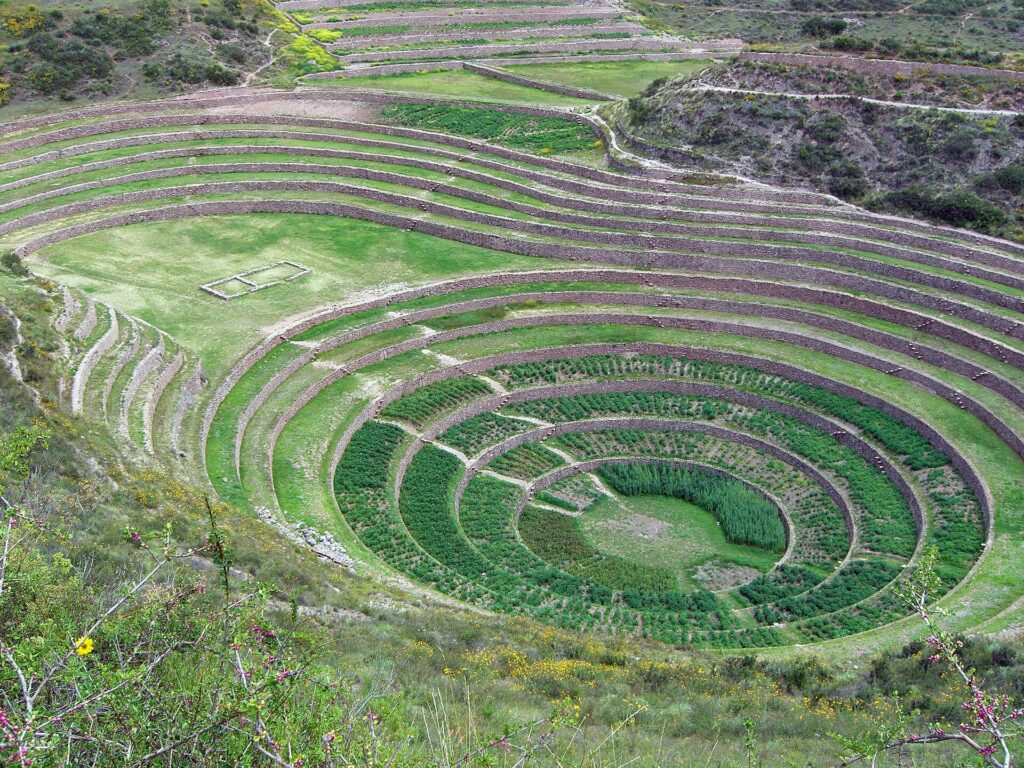
Among the best-known examples of this engineering is Moray, in the Cusco region, near Maras: large stepped circular depressions, up to about 30 metres deep, where a temperature difference of up to 15 °C has been measured between the top and the bottom. Its exact use has not been confirmed, although the most widespread explanation is that it was used for farming. We tell the story in more detail in our article on Moray.
From the terrace to the table
High-altitude farming explains much of the diversity of Andean cuisine. Thousands of potato varieties are grown in the Andean region, according to the International Potato Center (CIP), based in Peru, along with other tubers such as olluco and mashua. Each altitude zone offers different conditions, and Andean peoples learned to make the most of each one.
That relationship between land and plate is still alive. Many of the techniques used today to cook these crops, such as pachamanca or huatia, are covered in our article on Inca culinary techniques.
Why it matters to us at Colibrí Origins
At Colibrí Origins we work with ingredients that come from that same high-altitude and rainforest geography. Understanding how Andean peoples learned to farm in these conditions is part of understanding where what we do comes from: every ingredient tells the story of the land and of the hands that grow it.