
In La Molina, Lima, there is a facility few Peruvians know about, yet it plays a quiet role in global food security: the germplasm bank of the International Potato Center (CIP), the largest potato collection on the planet.
The World’s Largest Potato Germplasm Bank, in Peru
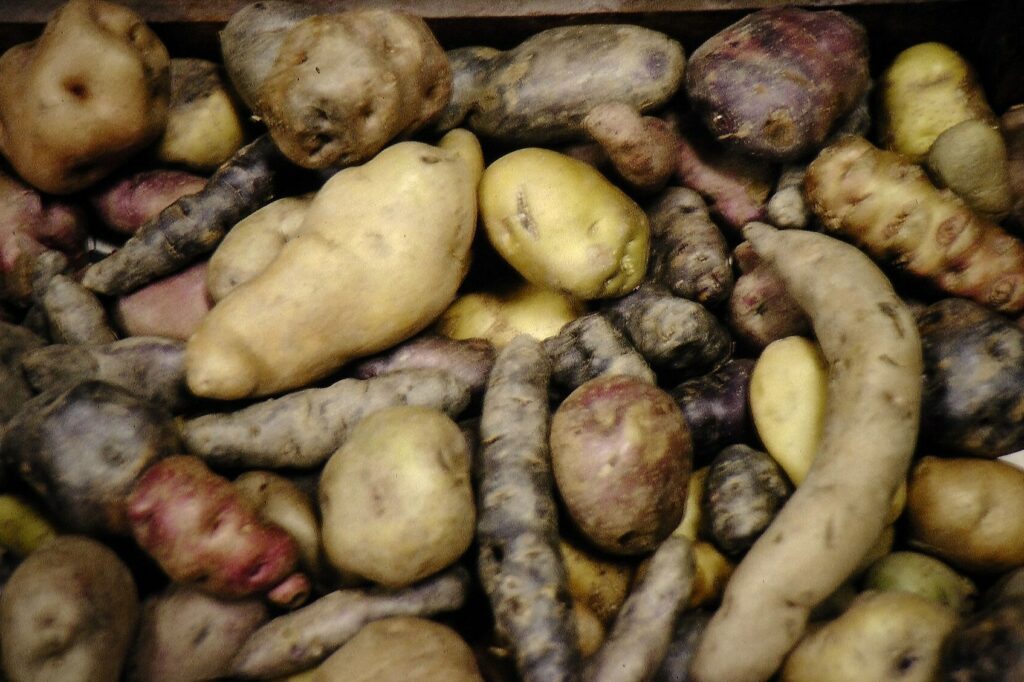
The CIP’s bank preserves thousands of potato varieties — both native and wild — along with sweet potato and other Andean roots and tubers, collected over decades across various Latin American countries. Part of this collection is also maintained in vitro, a conservation method that allows genetic material to be preserved without depending on continuous field planting.
How a Native Potato Reaches the Bank
Before becoming part of the CIP’s collection, each native potato variety goes through a collection process directly in Andean farming communities, followed by characterization that documents its properties and origin — work that, over the past decade, has allowed the CIP to distribute thousands of unique samples to both Peruvian researchers and institutions in dozens of countries, both developed and developing.
A Backup Copy in the Arctic
As an additional safeguard, part of this germplasm is also sent to the Svalbard Global Seed Vault, a facility built underground on a Norwegian island in the Arctic Circle, specifically designed to preserve seeds of crops from around the world against any scenario of loss in their countries of origin — whether due to natural disasters, conflicts, or any other cause.
Repatriation: Returning Diversity to Communities
An important part of this work isn’t just conservation, but also giving back: through germplasm repatriation programs, the CIP returns native varieties to Andean farming communities that were, at some point, collected in that very area, after going through phytosanitary control processes. These kinds of projects have helped increase cultivated genetic diversity in dozens of Andean communities, including emblematic areas like the Potato Park in Cusco.
Why This Matters in the Face of Climate Change
This conservation work isn’t just a historical archiving exercise. Many native potato varieties preserved in these banks show tolerance traits to extreme climate conditions — relevant given growing climate variability in the Andes — and part of the CIP’s work consists precisely of returning these varieties to farming communities to strengthen their resilience against this kind of challenge.
At Colibrí Origins, facilities like this remind us that the Andean biodiversity we value so much doesn’t preserve itself — it depends on active research and conservation decisions, many of them conveniently made right here in Peru.