
Long before any weather station existed, Andean communities already had their own method for anticipating how the rainy season would unfold: carefully observing a small group of stars in the night sky. This post explains how the Andean agricultural calendar worked and what role the stars played in it.
The Qullqa: The Pleiades as a Calendar
In Quechua, the Pleiades star cluster is known as Qullqa (also spelled “Collca”). Its reappearance in the sky before dawn, generally in early June, traditionally marked the start of the Andean agricultural year and a key moment for planning potato planting, one of the region’s most important crops.
Reading the Brightness of the Stars
Beyond its mere appearance, Andean communities also observed the brightness and apparent size of the Pleiades to anticipate how the following year’s harvest would turn out — a tradition already documented in colonial chronicles such as the Huarochirí Manuscript, which describes that if the “Cabrillas” (as they were also called) appeared large and bright, a good fruit ripening was expected; if they appeared small, difficulties were anticipated. More recent research has found a partial physical explanation for this phenomenon: high-altitude clouds associated with certain regional climate conditions can make the Pleiades appear genuinely dimmer, also affecting that season’s rainfall.
Beyond the Pleiades: The Southern Cross and the Milky Way
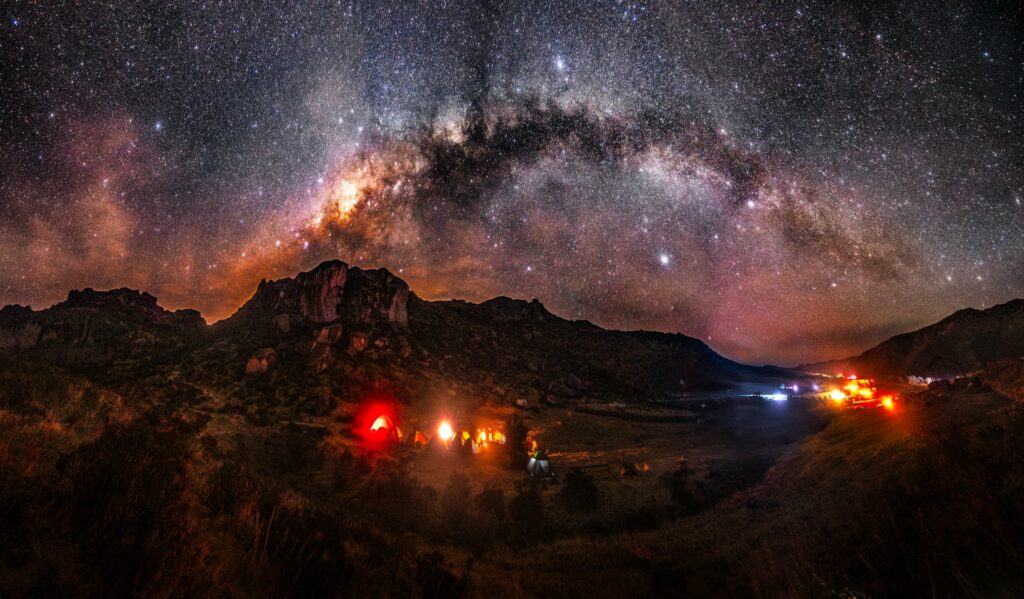
The Pleiades weren’t the only celestial reference used by Andean communities. The Incas also observed the position of the Southern Cross throughout the year to help determine the start and end of agricultural seasons. The Milky Way, known in Quechua as Mayu (“river”), also played an organizing role within the broader ritual calendar, conceived as a celestial river that structured much of the Andean worldview of time.
The Ceque-Quipu System
According to research by anthropologist Tom Zuidema, much of this astronomical knowledge was integrated into a broader system known as ceque-quipu: a network of imaginary lines (ceques) radiating from the Coricancha temple in Cusco toward various points on the horizon, used to organize both the calendar and the social and ritual administration of the entire empire. It’s a reminder that, for the Incas, observing the sky was never an isolated activity — it was woven into the political, social, and agricultural organization of the whole territory.
A Knowledge That Remains Alive
Far from being merely a historical curiosity, this practice continues today: various Quechua and Aymara communities still observe the Pleiades, lunar cycles, and other signs in the sky to guide their agricultural decisions, alongside any modern weather information available.
At Colibrí Origins, this story reminds us that Andean agricultural knowledge was never just about growing technique — it was also, for centuries, a sophisticated way of reading the environment to make better decisions, with the tools available in each era.