Of all the Andean grains we’ve covered on this blog, quinoa is by far the most internationally recognized — but precisely because of that familiarity, its story is rarely told in detail. Here it is. We start with Peruvian quinoa and its long Andean history.
A Grain With a Pre-Hispanic History
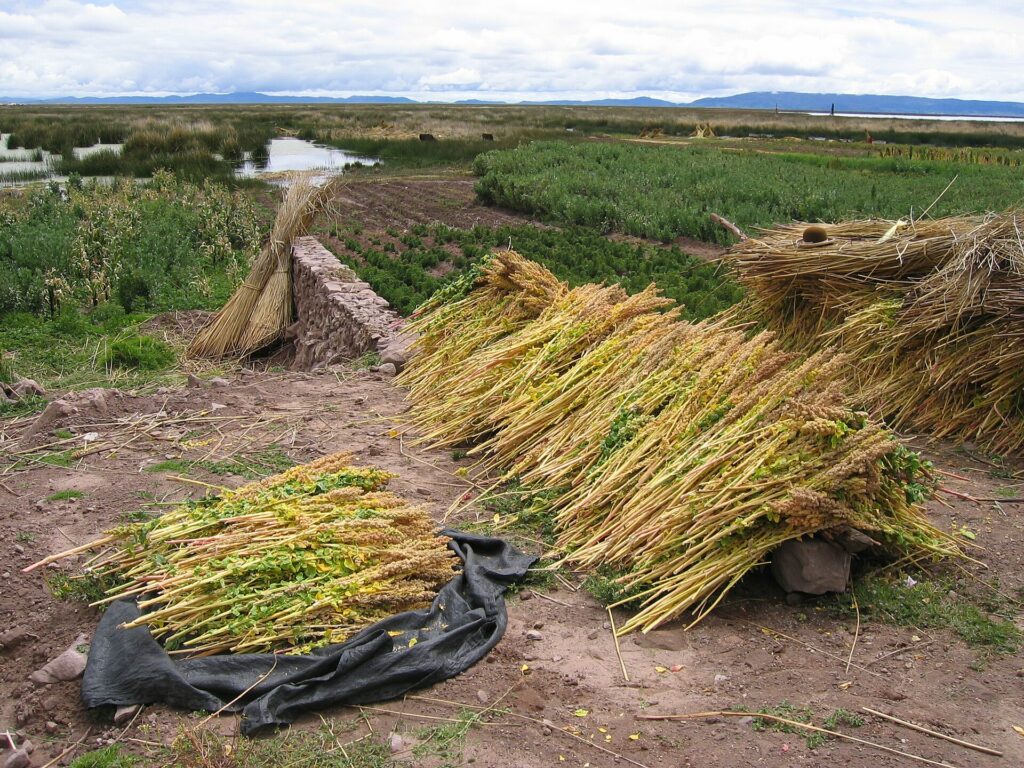
Quinoa cultivation in the Andes predates the Inca Empire by a wide margin — its domestication dates back several thousand years, long before any written record of its use existed. Unlike crops that gained international prominence relatively recently, quinoa has accompanied Andean communities almost continuously ever since.
Thousands of Varieties, One Grain
What’s sold as “quinoa” in any supermarket is, in reality, the tip of a much larger genetic iceberg. Peru preserves thousands of distinct varieties and ecotypes of Chenopodium quinoa, commercially grouped into a few color categories (white, red, black), but with real diversity that goes far beyond those three labels — the result of centuries of selection in Andean communities in Puno, Cusco, Ayacucho, and other high-Andean regions.
Color Varieties and Their Traditional Use
Commercially, quinoa is usually divided into three main colors: white (the most widespread and neutral in flavor), red, and black, each with slight differences in texture and cooking time. In the communities where it’s grown, these varieties aren’t simply interchangeable — each tends to be associated with somewhat different traditional preparations and uses, a distinction that’s often lost once the grain reaches other markets packaged for sale.
Why It Must Be Washed Before Cooking
As we mentioned in an earlier post about the science of Andean superfoods, quinoa is naturally coated in saponin, a bitter compound the plant itself produces as a repellent against birds and insects. That’s why the grain must be washed thoroughly before cooking — a step that removes this coating and has been part of its traditional preparation for generations.
From Andean Grain to Space Candidate
One of the lesser-known facts about quinoa is that, in the 1990s, it was included by NASA among the crops studied for life support systems in long-duration space missions (the program known as CELSS) — not because of any magical property, but due to specific agronomic characteristics: its amino acid profile, its relative ease of cultivation, and its good yield per unit of space, all relevant factors for any closed food production system.
A Leadership Peru Built in a Decade
We’ve already told in another post how Peru overtook Bolivia in 2014 as the world’s leading producer and exporter of quinoa, a position it still holds today with shipments to more than 69 countries. That leadership wasn’t a coincidence — it’s the result of combining the genetic diversity Peru already had with an export strategy that knew how to leverage it at the right moment.
At Colibrí Origins, quinoa reminds us of something important: even the world’s most famous Andean ingredient still has stories to tell that most people don’t know.
This content is for general information only and is not medical advice. If you have questions about eating a food or using a plant, consult a health professional.