
In a previous post we looked at how the Incas solved the challenge of storing food for an entire empire. But storing food is only part of the story — the techniques they used to cook it were just as sophisticated. Some of them, surprisingly, are still used today in the Peruvian Andes almost unchanged. Here we look at the Inca pachamanca and other techniques that have survived to this day.
Pachamanca: cooking with the heat of the earth
The most emblematic technique is pachamanca — a Quechua word meaning “earth pot.” The process begins by digging a hole in the ground and heating stones (preferably volcanic ones, for their ability to retain heat without cracking) until they are red-hot. These stones are placed at the bottom of the hole, forming a kind of underground oven. The food is then arranged on top in layers — first the tubers, then the meats, interspersed with more hot stones and aromatic herbs such as chincho or huacatay — and everything is covered with banana leaves and earth, sealing the hole completely. The result is slow, even cooking that can take between one and four hours, depending on the amount of food and the temperature reached.
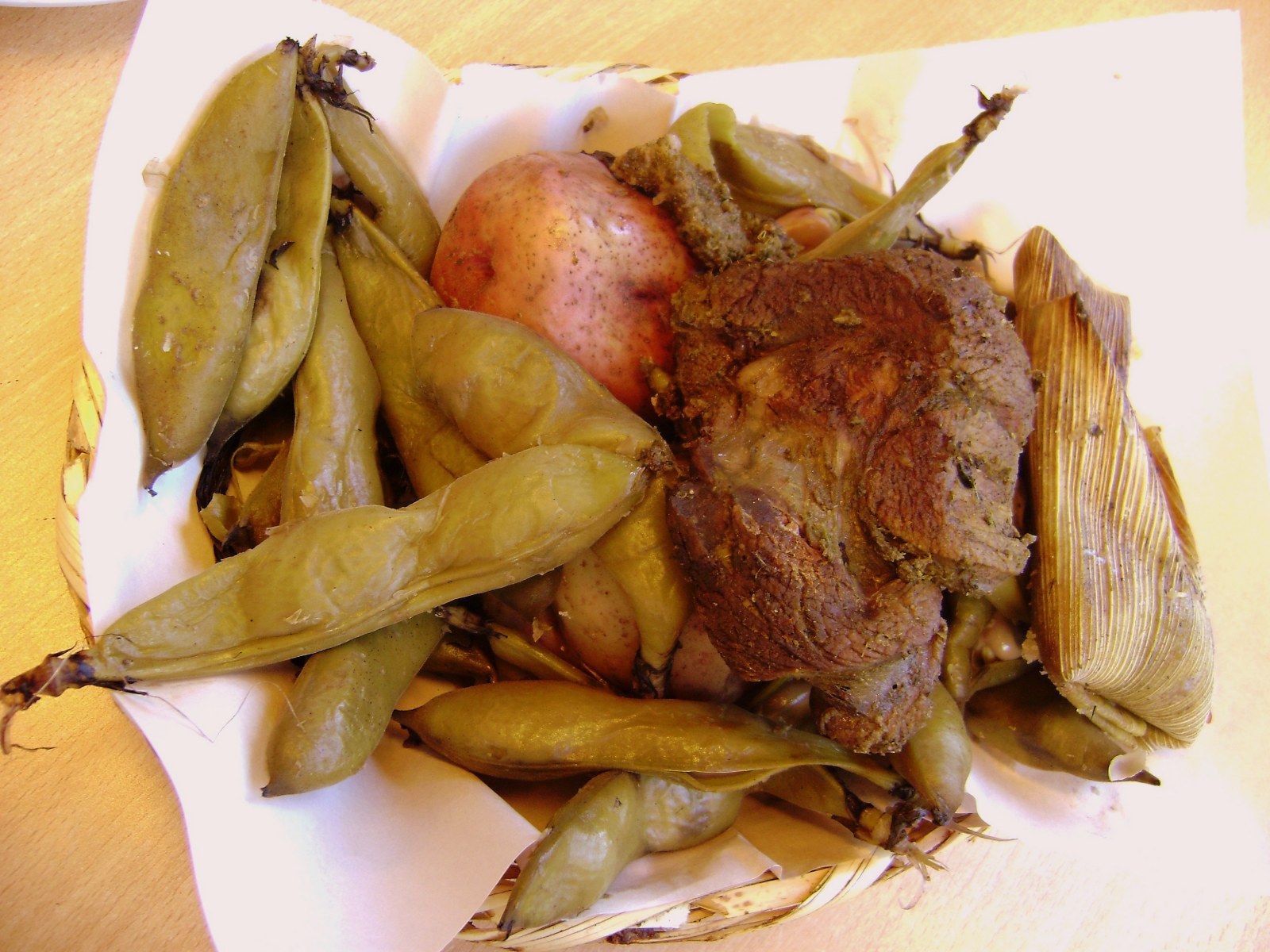
Huatia: the everyday version
Related to pachamanca but simpler is huatia, traditional in the regions of Cusco and Puno. Unlike pachamanca, huatia uses a shallower hole and, instead of stones, covers the food with clods of earth. It is traditionally prepared with tubers, legumes and grains in their natural state — a technique historically associated with harvest day, when freshly gathered produce was cooked right there in the field.
Fermentation: a technique with many uses
Another documented technique in pre-Hispanic Andean cuisine is fermentation, found above all in the making of chicha de jora, a fermented drink made from germinated and dried corn (the “jora”). This fermentation technique was not only used to produce the drink — it was also applied to preserving other foods, as a way of extending their shelf life without refrigeration, which obviously did not exist at the time.
Techniques that have survived to this day
What is remarkable about all this is how much has survived: centuries later, pachamanca is still one of the most representative dishes of Peruvian cuisine, prepared at celebrations and family gatherings using practically the same method documented since Inca times. Huatia is still associated with harvests in several Andean communities. And chicha de jora is still made by hand in different regions of the country.
At Colibrí Origins, every time we research an Andean ingredient we come across this same backstory: not just what was grown, but how it was prepared — techniques developed with the knowledge available in each era, many of which have not needed improving since.