
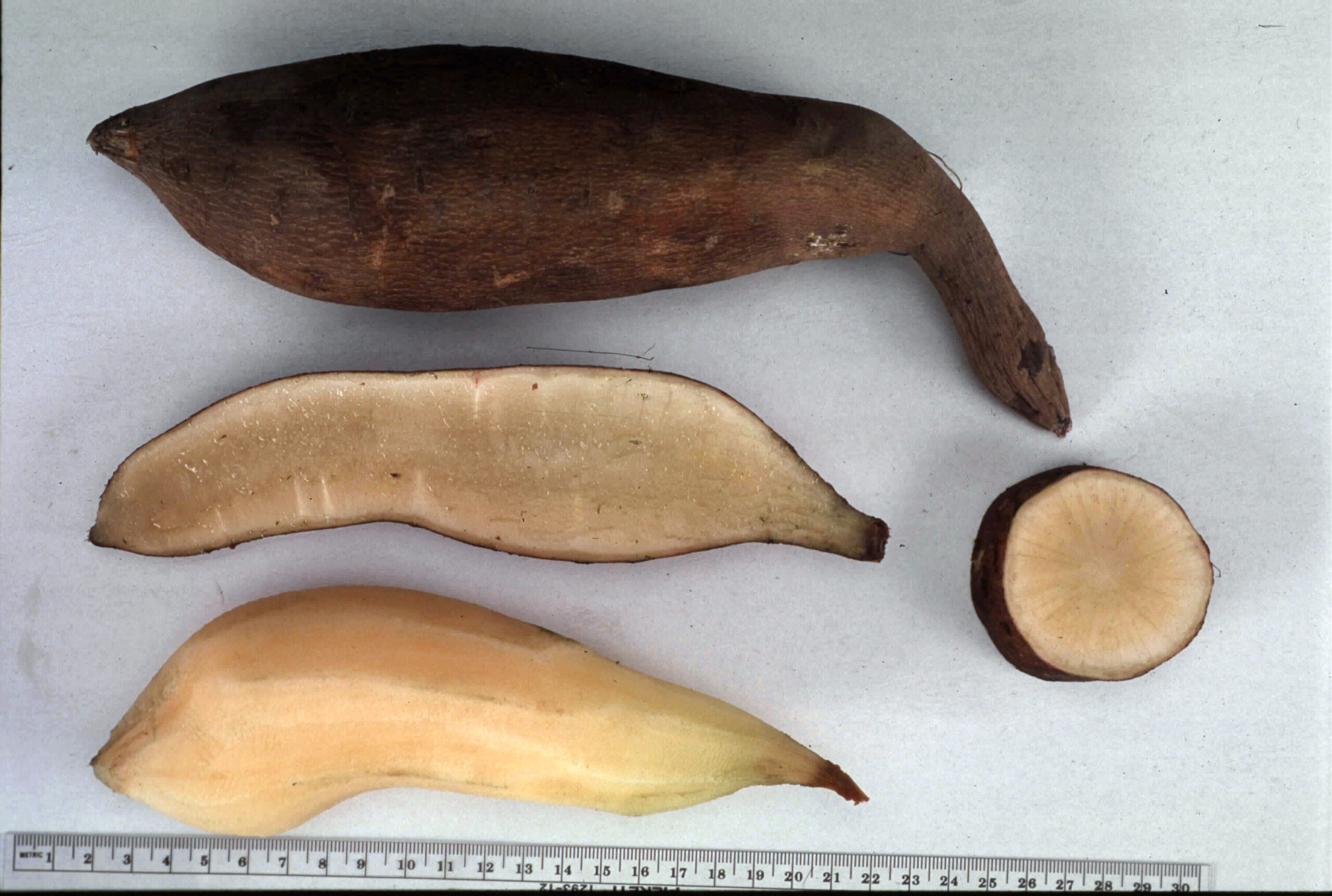
In the inter-Andean valleys of Peru, between the coast and the icy heights of the Andes, grows a root that very few people outside the country know how to recognize: the Peruvian yacón. It has been cultivated since pre-Columbian times in regions such as Cajamarca, Amazonas, Junín, Ayacucho, and Cusco, and although its appearance often leads to confusion with jicama, it is a crop with its own history — and its own botanical family.
Temperate valleys, not icy heights
Unlike maca, which only thrives above 3,800 meters of altitude, the yacón (Smallanthus sonchifolius) is grown at a much lower range: between 1,000 and 3,000 meters above sea level. This difference places it in a niche of its own within Andean biodiversity, in valleys with a more temperate climate than those of other emblematic high-Andean crops of Peru.
A name that tells its own story
In Quechua, the yacón is known as yakun, meaning “water.” The name is no coincidence: its root stores between 80% and 90% of its weight in water, an exceptionally high proportion even among Andean tubers and roots.
A relative of the sunflower, not of jicama
Although its appearance causes confusion with jicama, the yacón belongs to a completely different botanical family: it is a close relative of the sunflower and the Jerusalem artichoke, both members of the Asteraceae family. It’s one of those facts that is rarely told and that best illustrates the distinct identity of this Andean crop.
A crop with centuries of history
The presence of yacón in Peru predates the Incas by a long way: remains of this root have been found in pre-Columbian Peruvian tombs, evidence of a crop that has been part of Andean life for many centuries, long before any written record of it existed.
A root that doesn’t ask for much to grow
Unlike other more demanding crops, the yacón does not require intensive fertilizers or pesticides to develop, a characteristic that facilitates organic cultivation and makes it an attractive option for sustainable agriculture in the inter-Andean valleys where it grows.
A Secret After the Harvest: Resting in the Sun
Unlike many crops that are consumed as soon as they’re harvested, yacón has a particular post-harvest practice: traditionally, the roots are left to rest in the sun for several days after being pulled from the ground. This resting period allows the root to naturally become sweeter before being consumed — a simple but essential step within the traditional way of preparing it in the Andes.
More Than the Root: The Leaves Are Used Too
Although the root is the best-known part of yacón, in the Andean communities where it’s grown, the leaves are also traditionally used, usually as an infusion. This complementary use of the plant — not just the root, but the foliage as well — is another example of how Andean crops tend to be used in their entirety, without wasting any part of them.
In contemporary Peruvian cuisine, yacón is increasingly used in salads, juices, and cold dishes, thanks to its crisp texture and mildly sweet flavor when fresh. This versatility has helped yacón gain ground beyond traditional Andean markets, although it remains, to a large extent, a crop little known outside Peru. This growing culinary presence reflects a broader curiosity about lesser-known Andean crops.
At Colibrí Origins, we continue exploring the biodiversity of the Peruvian Andes and Amazon, and the yacón is a good example of how much there still is to tell: a root with centuries of history, a name that describes its own nature, and a place of its own — temperate, organic, little known — among Peru’s great crops.
This content is for general information only and is not medical advice. If you have questions about eating a food or using a plant, consult a health professional.