
In the flood-prone areas of the Peruvian Amazon, known as restinga, a palm tree has grown alongside the rainforest for generations: Mauritia flexuosa, the aguaje. It is a fruit deeply rooted in the identity of the Peruvian rainforest — especially in the Loreto region — although the world does not yet know it the way it knows maca or cacao. Here is the story of the aguaje Amazonian fruit, and why it deserves more attention.
An ecosystem of its own
Unlike crops such as maca or quinoa, which grow in the high sierra, the aguaje belongs to an entirely different ecosystem: the flood-prone forests of the lowland Amazon. This particularity makes the way it grows, is harvested, and forms part of the life of Amazonian communities unique within Peru’s biodiversity.
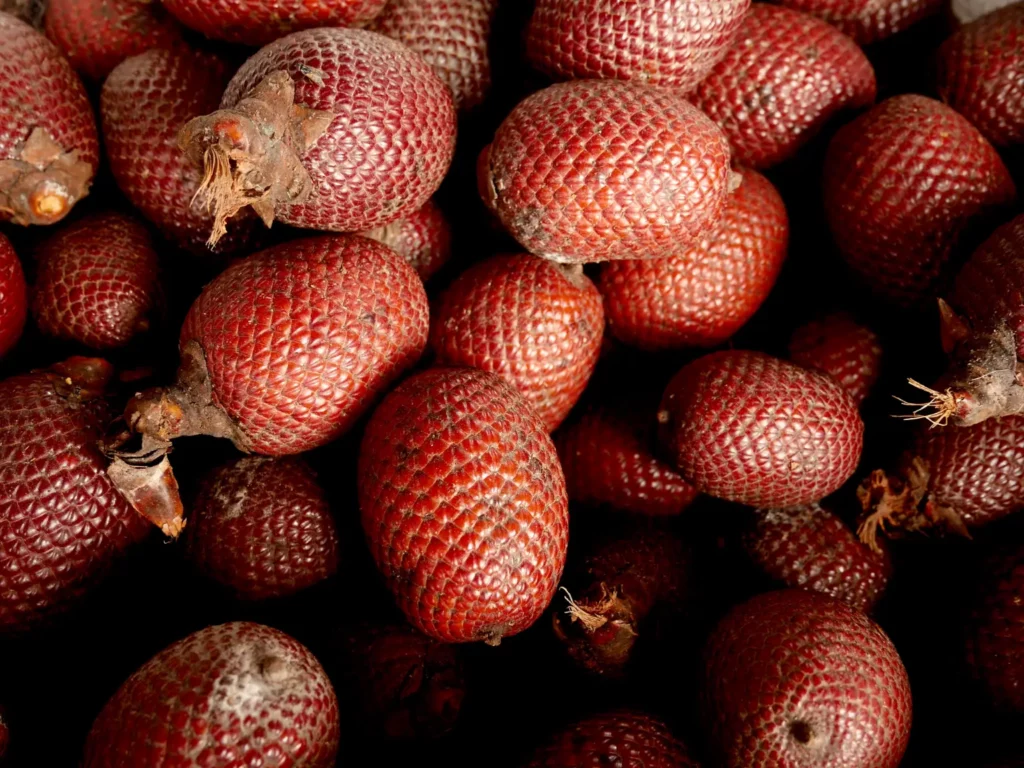
Composition
The aguaje stands out for its vitamin A and healthy fat content, qualities that make it a fruit of interest within a balanced diet.
This content is for general informational purposes only and does not constitute medical advice or replace the guidance of a healthcare professional.
Ongoing research
The Peruvian Amazon Research Institute (IIAP) is actively working on genetic improvement programs for the aguaje, with longer research cycles than those of other Amazonian fruits — a reflection of the complexity of this species and of everything that remains to be discovered about it.
The Economic Heart of the Aguaje: The Markets of Iquitos
In Iquitos, the largest city in the Peruvian Amazon, the aguaje carries its own commercial and cultural weight. The Belén market, one of the city’s best known, concentrates the sale of this fruit year-round, traditionally handled by the so-called “aguajeras” — vendors, mostly women, who have sustained this economic activity tied directly to the fruit for generations. It’s an example of how an Amazonian ingredient can sustain an entire local economy even before international markets come into play.
A Fruit That Feeds the Whole Rainforest
The aguaje isn’t only a resource for human communities — aguaje palms (known as “aguajales” when they form dense forests) are also a key food source for Amazonian wildlife, including macaws, tapirs, and other species that feed on its fruit. This ecological role makes aguajales especially valuable ecosystems for the region’s biodiversity, beyond their value as an ingredient.
A treasure yet to be discovered
At Colibrí Origins, we believe that Peru’s Amazonian and Andean biodiversity holds treasures that deserve to be told with the same care with which they grow. The aguaje is one of them: a fruit with an identity all its own, still waiting to be discovered by the rest of the world.
Restinga: An Ecosystem Few Know
The term “restinga” describes a specific type of Amazonian forest that floods seasonally, generally between December and May, when the level of the Amazonian rivers rises naturally. It is precisely in this changing environment that the aguaje, an Amazonian fruit, thrives — a plant capable of tolerating long periods with its roots submerged, something that would be lethal for the vast majority of dry-land crops.
A Fruit Rooted in Amazonian Culture
Beyond its nutritional value, the aguaje holds an important place in the daily life of communities in Loreto and other Amazonian regions of Peru, where it has been traditionally consumed for generations — in beverages, ice cream, and as fresh fruit in local markets. This cultural rootedness is part of what makes telling its story meaningful beyond the nutritional data: it is also a story about regional identity.
The Challenge of Researching a Complex Species
The genetic improvement cycles for aguaje carried out by IIAP are considerably longer than those of other Amazonian fruits like camu camu. This is partly because the aguaje palm takes several years to reach reproductive maturity, which means any genetic improvement program requires a much greater time investment than is typical in agricultural research. It’s a reminder that Amazonian biodiversity, though generous, isn’t always simple to study or scale commercially.