BIODIVERSITY
Two worlds, one shared richness: unique ingredients shaped by altitude, climate and centuries of ancestral wisdom.
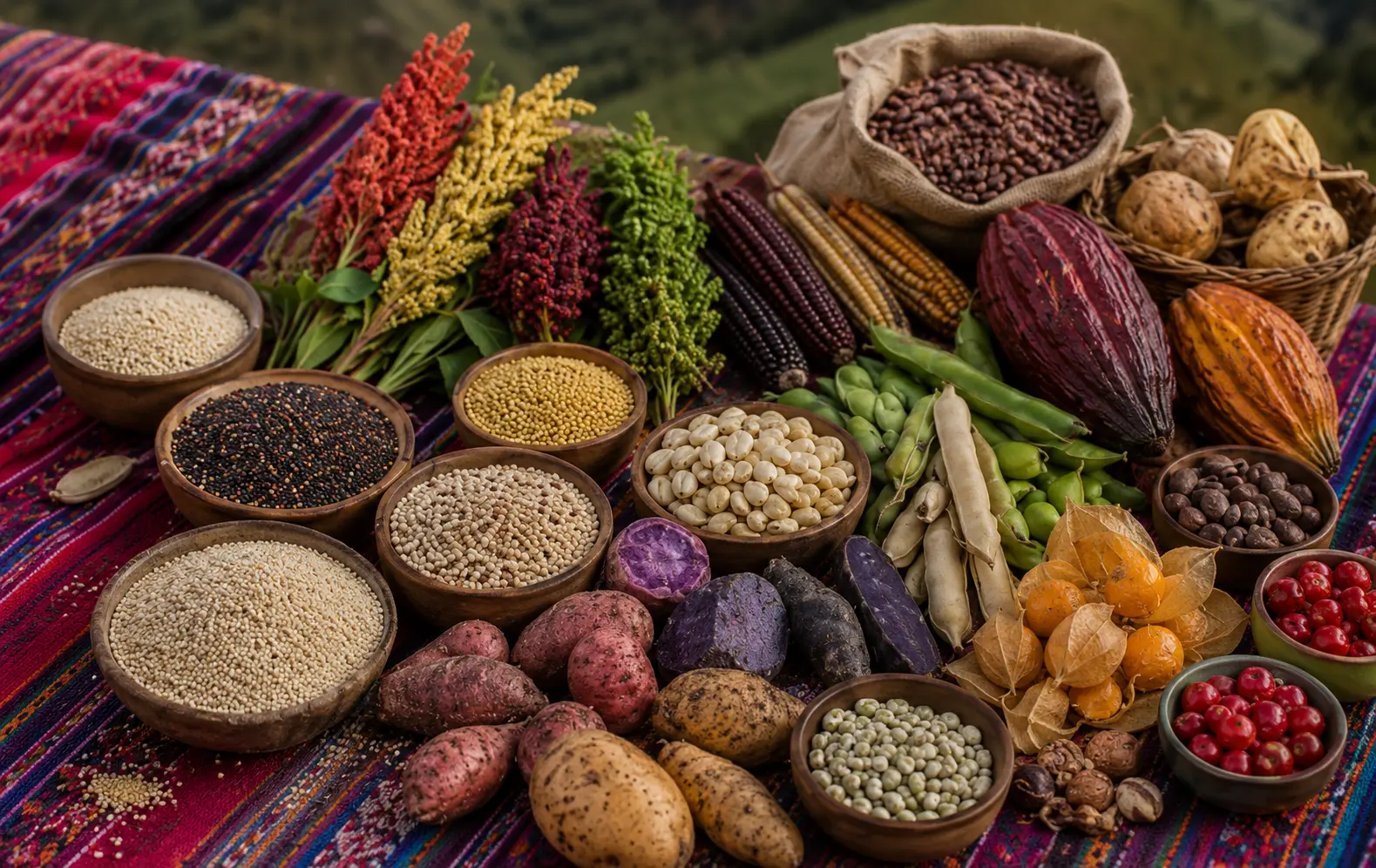
From the Peruvian Andes come ancestral grains, native seeds and botanical treasures cultivated for generations, with exceptional nutritional value.
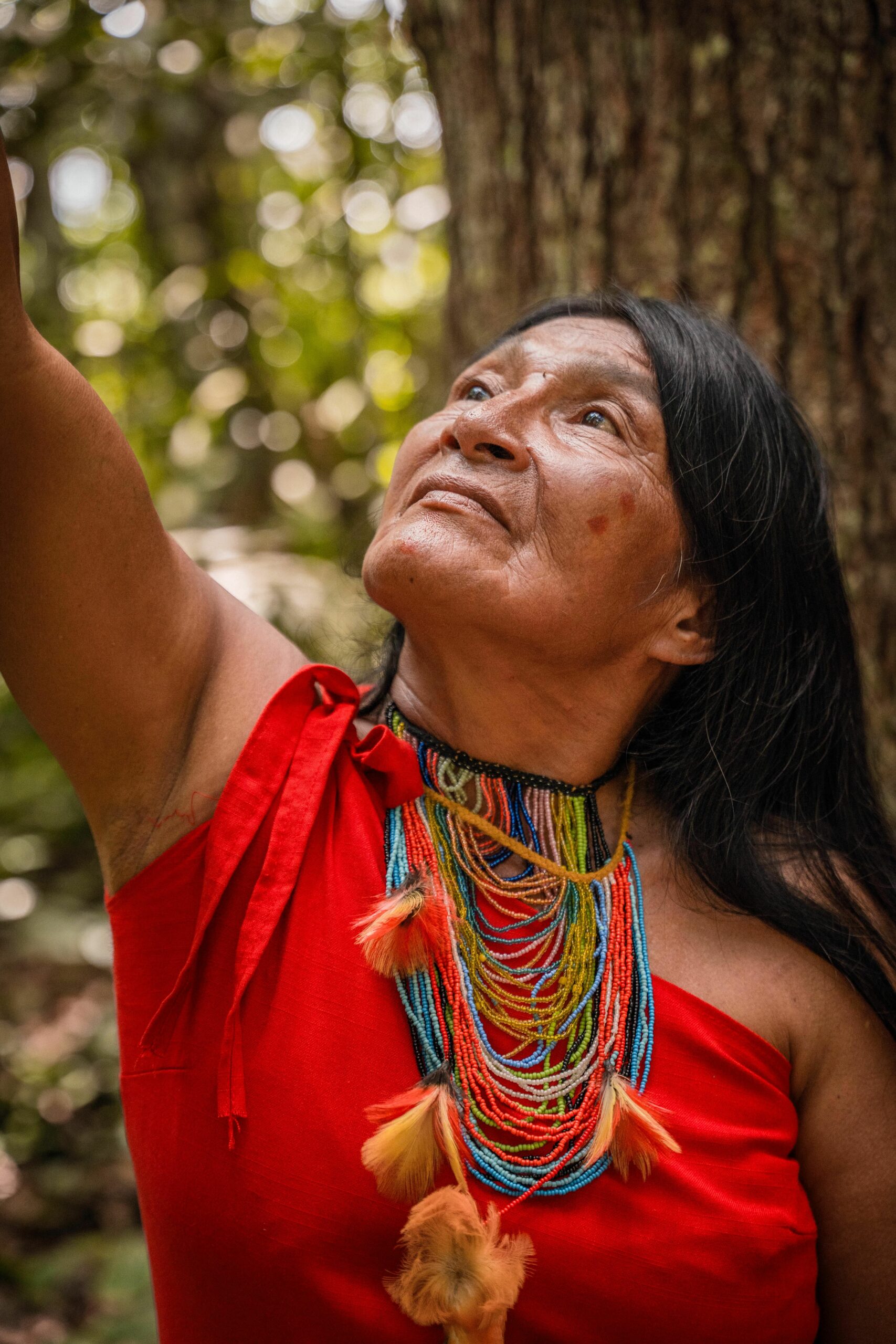
From the Peruvian Amazon rainforest come fruits, roots and functional plants unique in the world, the result of one of the planet's most biodiverse ecosystems.
Together, the Andes and the Amazon offer us a catalog of ingredients with endless possibilities for innovation.
Among the treasures that inspire our formulas are maca and quinoa from the high highlands, cultivated for generations above 3,800 meters of altitude; and camu camu and fine-aroma cacao from the Peruvian Amazon, internationally recognized for their nutritional richness and their role in the planet's biodiversity. Each ingredient tells the story of the land and the hands that grow it.
A catalog shaped by geography
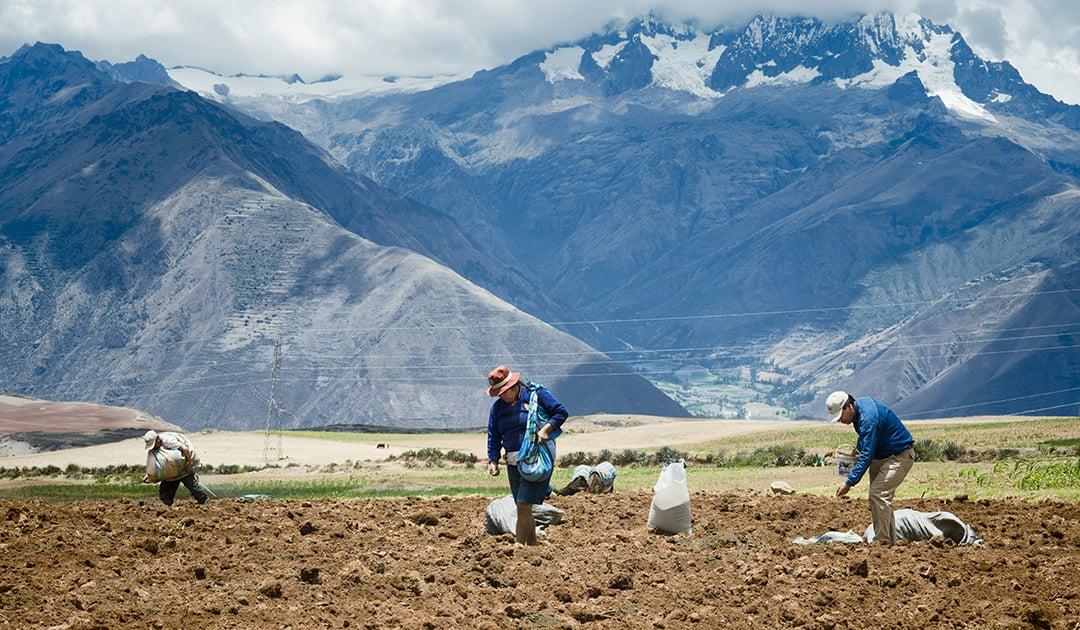
Few countries in the world concentrate the diversity of microclimates that Peru has. In just a few hours of travel, you can go from the 4,000-meter altitude of the Andean highlands to the dense humidity of the lowland Amazon rainforest — and each of these ecosystems has, over centuries, shaped ingredients that exist nowhere else on the planet under the same conditions. This variety of Andean and Amazonian superfoods is, to a large extent, what makes Peru a global reference in food biodiversity.
The high sierra: resilience and altitude
In the highlands, crops like maca and quinoa have evolved over generations to survive extreme conditions — oxygen-poor soils, temperatures that vary drastically between day and night, and unpredictable seasonal rainfall. This resilience is no coincidence: it is the result of a centuries-long adaptation process, both of the plant and of the communities that learned to grow it in harmony with such a demanding environment.
The Amazon: abundance and biodiversity
In the rainforest, the pattern is different but equally fascinating: ecosystems like the restinga (flood-prone areas of the lowland Amazon) produce fruits like camu camu or aguaje, adapted to flooding cycles that would be unviable for any highland crop. This type of Amazonian biodiversity also represents a source still largely unexplored internationally — many of these ingredients are widely known within Peru, but are only just beginning to find their place in the rest of the world.
Why biodiversity matters for functional nutrition
Working with Andean and Amazonian superfoods is not just a brand decision — it is a commitment to genetic and nutritional diversity in the face of the homogenization that dominates much of the global food industry. Every ingredient we incorporate into our formulas keeps its identity of origin, rather than becoming a generic commodity. It's a different way of understanding nutrition: not the fastest to scale, but the most faithful to where what we eat actually comes from.