
High in the Peruvian Andes grows a small-leaved shrub whose scent can be recognised from several metres away. It is called muña, and it belongs to the mint family. In many Andean homes it is an everyday plant, yet outside the region it is hardly talked about.
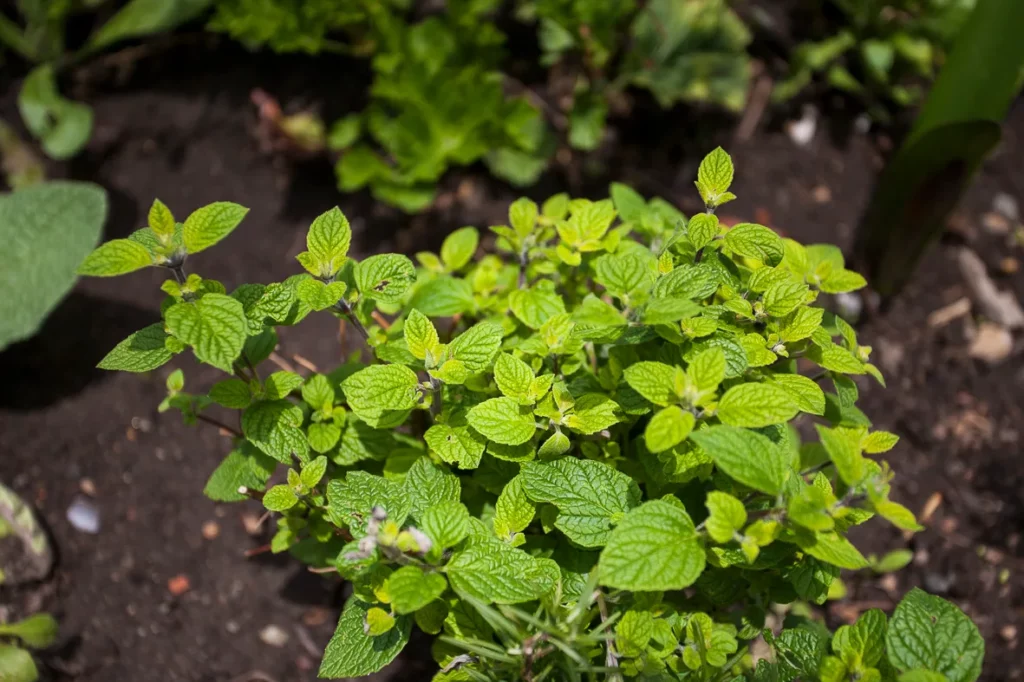
A mountain mint
Muña is an aromatic shrub of the genus Minthostachys, in the mint family (Lamiaceae). In Peru the name muña is used above all for Minthostachys mollis, the best-known species of the genus. It is a plant of the Andes: the genus ranges from northern Venezuela through Colombia, Ecuador, Peru and Bolivia to central Argentina.
One scent, many names
The same plant, or very similar ones, goes by different names depending on the place. From central Peru to Bolivia it is called muña; in northern Peru, chancua; in Bolivia also q’oa; in Ecuador, poleo or tipo; and in Argentina, peperina. Local names rarely distinguish between species, which makes botanists’ work harder.
Where it grows
It is a highland plant. A study carried out in Huánuco, in Peru’s central highlands, records it at roughly 2,400 to 3,900 metres above sea level. The same study notes that six species of the genus are recorded in Peru, three of them found only there.
In the Andean kitchen and home
The traditional uses described in the literature are very everyday ones. In Huánuco, for example, it seasons a local green broth. It is also prepared as an infusion, mainly as a family-tradition drink. And it has a lesser-known use: in southern Peru it has been placed among stored tubers to protect them from pests, and elsewhere it has been used to keep insects and ticks off livestock.
What it smells of, and why
The aroma of muña comes from its essential oil. Analyses describe it as a mixture of aromatic compounds, among which pulegone and menthone stand out, together with others such as limonene. The proportions change a lot with place, altitude, season and the part of the plant analysed: in different studies the main compound has been pulegone, menthone, carvacryl acetate or others. So two samples of muña may neither smell nor contain the same.
What science has studied
Muña also interests laboratories. A review published in 2026 gathers the work of the last two decades and notes that research has grown, mostly in Peru and Argentina. In laboratory tests the oil has been tried against bacteria and fungi, as a repellent and insecticide against stored-grain pests, and as an antioxidant in foods such as chocolate or sacha inchi oil.
This should be read with care: these are laboratory or animal results and do not show effects in people. The same review stresses that safety and efficacy studies under real conditions are still lacking, and that chemical variability makes it hard to standardise any extract.
A plant to look after
As with other wild plants, demand can be a risk. Larger-scale extraction of essential oils, in Argentina and Peru, has led in some areas to local over-harvesting of wild populations. In addition, a rat study described moderate acute toxicity and liver and lung effects at high doses, so this is not a plant to treat lightly. One more reason to know it well before thinking of using it as an ingredient.
A plant to get to know
Muña sums up what draws us to Andean biodiversity: a humble, everyday plant with complex chemistry and much still to study. At COLIBRÍ ORIGINS we believe every species deserves to be understood rigorously before it reaches a product.
This content is for general information only and is not medical advice. If you have doubts about using a plant, consult a health professional.
Sources
- Eduardo, K., Marchena-Chanduvi, R. and Vásquez-Senador, M. (2026). Minthostachys mollis: Chemical composition, biological activities and potential applications in a systematic and bibliometric review. Scientia Agropecuaria 17(2): 443-462. https://revistas.unitru.edu.pe/index.php/scientiaagrop/article/download/7476/7467/30165
- Maquera Lupaca, D. et al. (2009). Chemical components of the essential oils of muña Minthostachys mollis in Huánuco. Investigación Valdizana 3(2): 100-106. https://www.redalyc.org/pdf/5860/586061880008.pdf
- Wikipedia: Minthostachys (genus; summary based on Schmidt-Lebuhn, A. N. (2008), Journal of Ethnopharmacology 118: 343-353). https://en.wikipedia.org/wiki/Minthostachys